
Thanks to Cole (@COLESLAW927) for this week’s topic.
I’ve talked before about core sales skills and how to develop personal sales strategies– and today I want to talk about tools and processes. The most persuasive, highly skilled salesperson in the world will do a poor job without the tools and habits that lead to success. Here are a few lessons to get you on the right track.
Lesson 1: Don’t be a tool, use one instead.
In almost every selling situation -from B2B to retail- you should really be using a CRM of some kind. Customer Relationship Manager programs are vital to salespeople for one simple reason- brainpower. Remember taking cumulative finals in college? The ones that cover everything you’ve learned for the entire semester? They sucked. Now think of doing that for every account you cover, every customer you talk to, and every purchase you process. It can be done- but it takes an insane amount of brainpower (which is better used elsewhere). CRM’s do the remembering for you so when you talk to people you can track what’s happened, see where you need to go, and plan how you should get there.
A CRM also lets you take your selling activities to the next level with metrics of all kinds. Understanding who is buying, when, and why can help you make data-driven business decisions on a daily basis- boosting your productivity, qualification, and ultimately your win rate.
The big two CRM’s are Salesforce and Microsoft Dynamics CRM- both of which approach relationship management in similar ways.
Nope- there are hosts of others. I’ve heard only good things about Close.io, NetSuite, HubSpot, and OnContact. There are a ton to choose from.
Lesson 2: Stay smart with your Inbox
Getting a lot of emails is a byproduct of doing a good job in sales. Some will be important and require a response, but a lot will be unrelated to you or information-only. You need to be responsive and attentive, but can’t if you spend your whole life reading and sorting. Use the filtering and rule-creation abilities of your email program to get smart and stay organized.
Here’s a few tips:
- Your Inbox should be for important emails that need your immediate attention. Write rules and use folders to sort out emails that are either not important or don’t need immediate attention.
- Don’t let the inbox interrupt important tasks- keep focus by closing Outlook/Gmail when you need to get things done and can’t be interrupted.
- If you’re suffering from Inbox overload- let the fires burn while you take time to get organized. You do yourself no favors by letting the problem get worse due to poor organization.
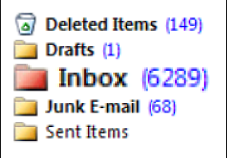
Don’t be that guy.
Lesson 3: Break the bad habit addiction
Do you take time every day to improve your craft? How often do you get stressed out and end up on Reddit? When was the last time you role-played your value pitch with a colleague? Do you schedule time each day for the un-fun tasks like writing quotes, working cold leads, or hashing out proposals? How much time do you spend at the proverbial water cooler?
Sales success comes from daily effort. Develop consistent habits and make sure to sweat the small/mundane stuff. Doing well consistently on the small stuff leads to success with the big. If you’re having a motivational crisis- take 5 and refocus. Here’s how I split my day when I’m not on the road:
7:45-9:00 AM: Respond to pending emails/problems. Plan the daily must-do tasks.
9:00-11:00 AM: Existing business recap. Straighten up CRM notes, follow up on existing account questions/issues.
11:00 AM-1:00 PM: Professional development and lunch break. Work on writing/speaking skills, value pitches, learn something new about the product/service, keep up on the industry, network, etc. Eat lunch and check Reddit refocus.
1:00-3:00 PM: New business development. LinkedIn research, cold calling, open new opportunities, update CRM.
3:00-5:00 PM: Wrap up, email blasts, and open meeting time. Anything that needs extra attention can be worked on during this time.
7:45 PM: Quick email check for anything urgent.
This schedule works for me because nothing is ignored. If I run out of things to do during a certain scheduled time- there are fall backs to other sales activities. If I run out of time- I have scheduled extra time at the end of the day to look back into it. When I feel drained- I have scheduled time to relax and refocus. Develop a similar schedule for yourself and stick to it. You’ll be surprised how quickly the bad habits fall away.

 Christian McCall